IAQ Checklist for Universities
Published
Building Healthier Residence Halls Before Move-In Day

7-Steps to Clean Air for Facility Teams at Universities
More than 20 million students attend U.S. colleges and universities each year, and millions of them live in campus housing. Before the first box is unpacked on move-in day, university facility teams have a narrow window to ensure residence halls are clean, safe and ready for occupancy.
Fresh paint, repaired furniture and polished common areas are easy to see. One of the most important preparations, however, is invisible: indoor air quality (IAQ).
From aging HVAC systems and elevated humidity to hidden moisture intrusion and airborne mold spores, indoor environmental conditions can significantly influence the student living experience.
Summer break provides facility teams with a valuable opportunity to identify potential issues, complete preventative maintenance and create healthier indoor environments before residence halls are once again fully occupied.
That opportunity is especially important because many college and university residence halls were built decades ago. While countless buildings have been modernized and renovated over the years, older infrastructure can still present unique challenges for ventilation, moisture control and HVAC performance.
Combined with warmer, more humid weather patterns across much of the United States, proactive indoor air quality management has become an increasingly important part of preparing campus housing for a successful academic year.
Aging Infrastructure, More IAQ Risks
Many of the most recognizable colleges and universities in the United States have residence halls that date back well over a century.
Even institutions that have invested heavily in new student housing often maintain a significant inventory of buildings constructed during the post-war expansion of higher education in the 1950s through the 1970s.
Age alone does not determine a building's indoor environmental quality. Many historic residence halls have undergone extensive renovations, HVAC upgrades and modernization over the years.
However, older buildings can present unique facility management challenges, including:
• Aging mechanical systems
• Building envelopes that require continual maintenance
• Legacy plumbing infrastructure
• Moisture intrusion from roofs, windows or foundations
• Ventilation systems designed for occupancy patterns that have evolved significantly over time
When combined with today's warmer, more humid weather patterns in many regions, these factors make proactive indoor air quality management increasingly important for higher education facility teams.
Why Summer Break is the Ideal Window
During the summer months, many residence halls experience reduced occupancy, modified HVAC schedules or temporary shutdowns while maintenance projects are completed.
These conditions can unintentionally create an environment where indoor air quality deteriorates if moisture is allowed to accumulate.
Common contributors include:
• Elevated indoor humidity
• Condensation on cooling equipment
• Plumbing leaks
• Roof leaks following summer storms
• Stagnant air in unoccupied spaces
• Dust accumulation within HVAC systems
• Moisture trapped behind furnishings or building materials
According to the U.S. Environmental Protection Agency (EPA), the key to preventing mold is not simply removing mold—it is controlling moisture before mold has the opportunity to grow. The EPA also recommends maintaining indoor relative humidity below 60%, with an ideal range between 30% and 50%.¹
For facility teams, the weeks leading up to student move-in represent one of the best opportunities of the year to identify and correct potential issues before they become occupant complaints.
Mold: A Persistent Campus Challenge
Every year, colleges and universities across the United States invest significant time and resources addressing mold and moisture issues in residence halls.
In some cases, localized mold growth requires only minor remediation. In others, universities have temporarily relocated students while facility teams completed repairs and moisture remediation.
These situations often receive widespread media attention—not because mold is unique to higher education, but because residence halls house thousands of students in close proximity.
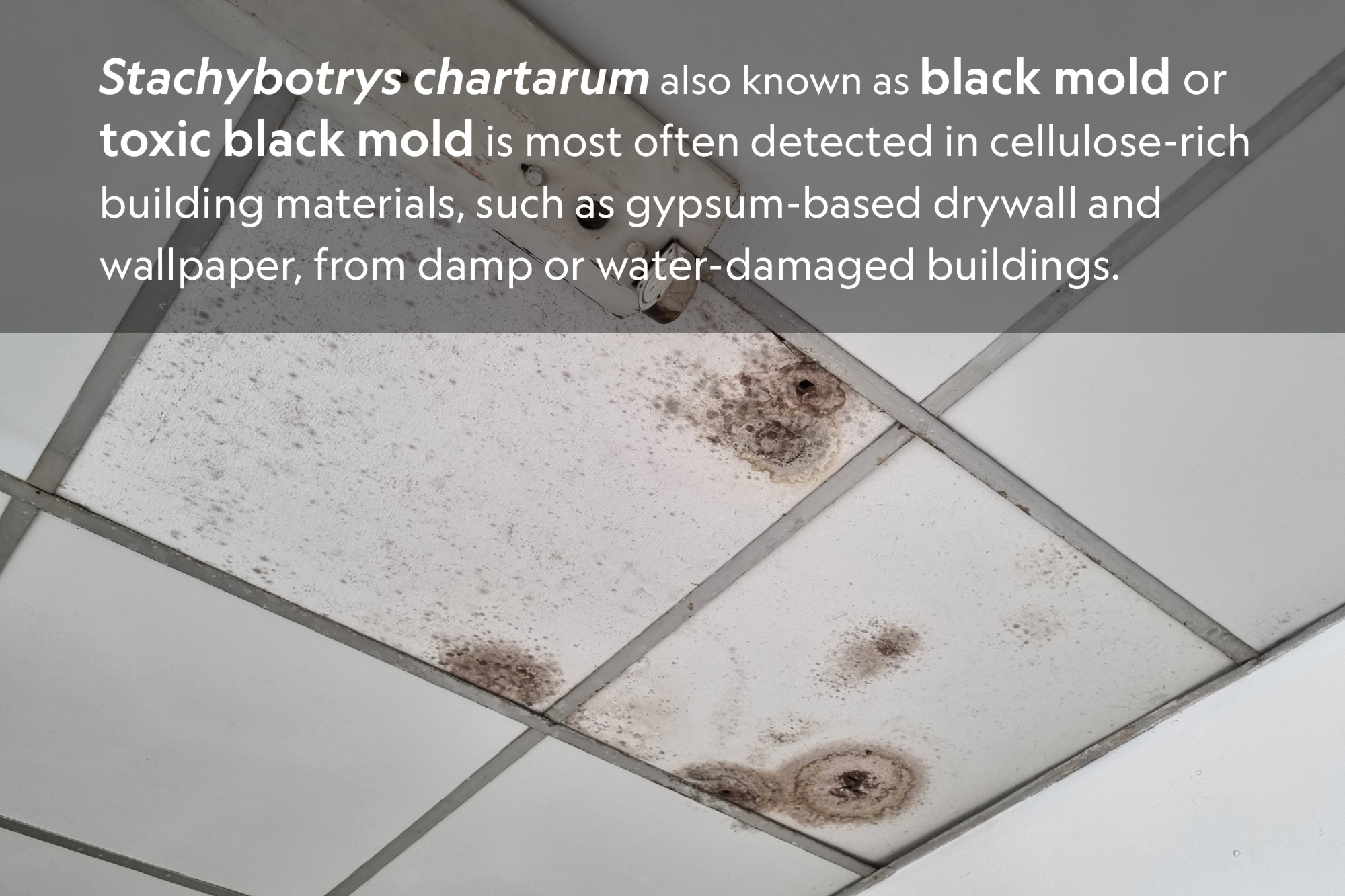
The reality is that mold problems typically begin long before mold becomes visible.
Moisture from leaks, condensation or prolonged humidity can create conditions where mold develops behind walls, above ceilings or within HVAC components. Once established, mold releases microscopic spores that become part of the indoor air. Read our related post on Bioaerosols, including mold.
The EPA emphasizes that moisture control, timely maintenance and prompt drying of water-damaged materials are the most effective strategies for preventing mold growth. Materials that become wet should generally be cleaned and dried within 24 to 48 hours whenever possible to help prevent mold from developing.²
Effective mold remediation is not just about removing visible mold—it is about restoring healthy indoor air throughout the building. That requires addressing both the source of moisture and the airborne particles that may remain after remediation activities are complete.
The 7-Step Pre-Move-In IAQ Checklist
Preparing residence halls for move-in should include more than cosmetic improvements. A comprehensive indoor air quality strategy can help create healthier indoor environments while reducing maintenance issues throughout the academic year. DOWNLOAD THE 7-STEP IAQ CHECKLIST.
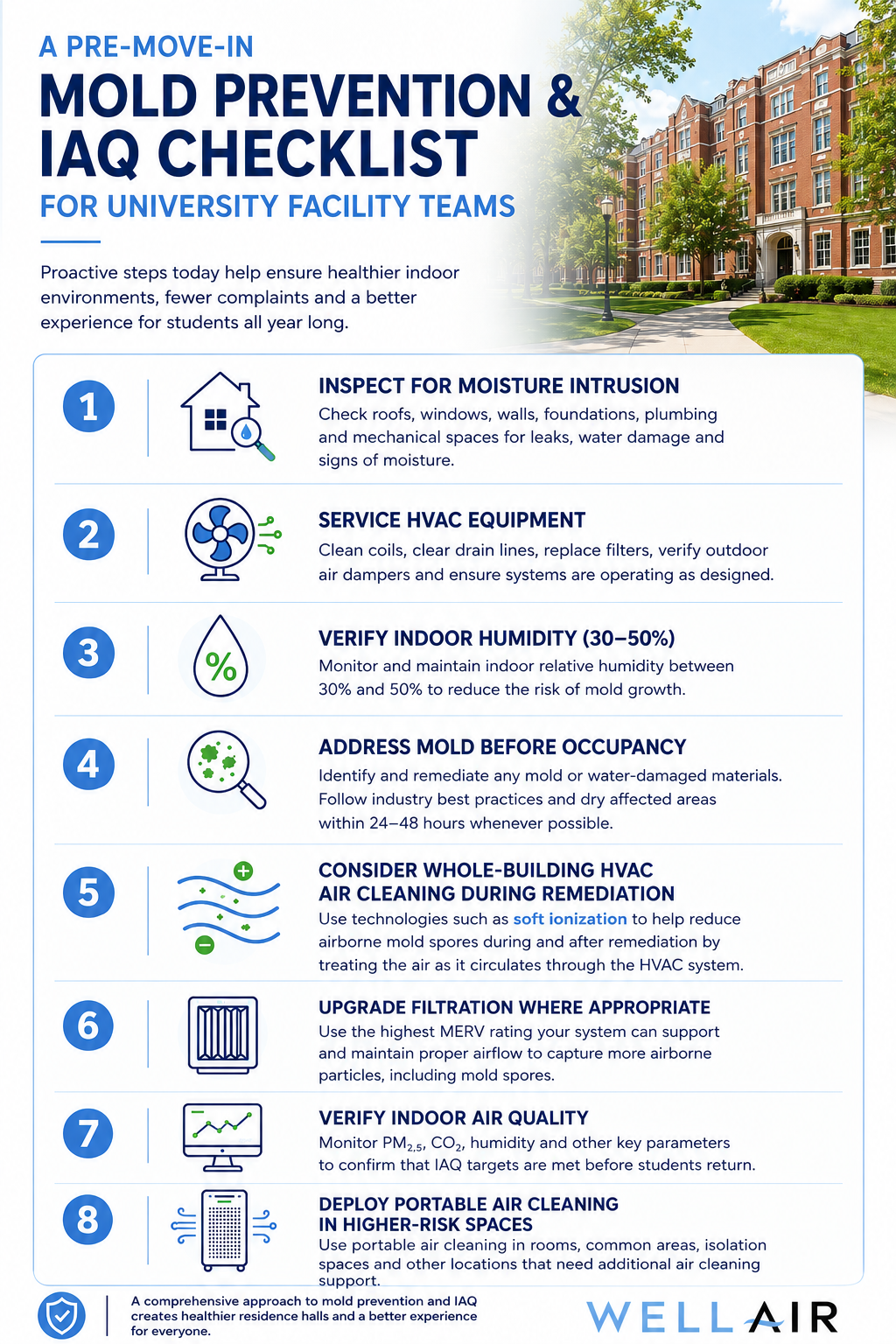
1. Inspect the Building Envelope
Begin by identifying sources of moisture before they become indoor air quality problems.
Inspect:
• Roofing systems
• Windows and seals
• Exterior walls
• Plumbing systems
• Foundation drainage
• Mechanical rooms
Even small water intrusion issues can become much larger problems if left unresolved during periods of warm weather and high humidity.
2. Service HVAC Systems
Residence hall HVAC systems should receive a thorough inspection before occupancy increases.
Key maintenance activities include:
• Replacing air filters
• Cleaning evaporator coils
• Clearing condensate drain lines
• Inspecting drain pans
• Verifying outdoor air dampers operate correctly
• Checking supply and return airflow
Well-maintained HVAC systems help improve ventilation, manage humidity and reduce airborne particulate accumulation throughout the building.
3. Control Indoor Humidity
Humidity management is one of the most effective tools available for preventing mold growth.
Facility teams should verify that HVAC equipment and building controls are maintaining appropriate humidity levels throughout residence halls—particularly in:
• Ground-floor rooms
• Basements
• Laundry facilities
• Community bathrooms
• Storage areas
• Buildings located in humid climates
Monitoring humidity throughout the summer can identify developing issues before students arrive.
4. Incorporate Whole-Building Air Cleaning into Mold Remediation Plans
If mold is discovered during summer inspections, remediation should extend beyond removing contaminated materials. While addressing the source of moisture remains the highest priority, facility teams should also consider how airborne mold spores will be managed during and after remediation.
Cleaning, demolition and restoration activities can disturb mold colonies, releasing microscopic spores into the air where they may circulate throughout occupied spaces via the HVAC system. Left unmanaged, these airborne particles can continue to affect indoor air quality even after visible mold has been removed.
In addition to following established mold remediation protocols, universities should consider incorporating whole-building HVAC air cleaning technologies into their remediation strategy.
Technologies such as soft ionization can help reduce airborne mold spores as air circulates through the HVAC system, complementing filtration, ventilation and source removal—not replacing them.
By combining moisture remediation with HVAC-based air cleaning, facility teams can take a more comprehensive approach to restoring indoor air quality before students return while helping reduce the likelihood of ongoing airborne spore circulation throughout the building.
5. Upgrade Filtration Where Appropriate
Air filtration plays an important role in reducing airborne particles circulating throughout residence halls.
Where HVAC systems allow, facility teams should evaluate opportunities to improve filtration performance while maintaining proper airflow.
For buildings where HVAC upgrades may be limited by system design, supplemental technologies can provide additional support in improving indoor air quality.
6. Address High-Risk Areas First
Certain areas consistently deserve additional attention.
These include:
• Previously reported moisture locations
• Rooms vacant for extended periods
• Areas affected by prior water damage
• Mechanical spaces
• Rooms with limited ventilation
• Spaces adjacent to bathrooms or plumbing chases
Addressing these locations proactively can reduce occupant complaints during the semester.
7. Verify Indoor Air Quality Before Students Return
Increasingly, universities are moving beyond reactive maintenance by incorporating indoor air quality sensors and monitoring into their building management strategies.
Monitor parameters such as:
• Fine particulate matter (PM2.5)
• Carbon dioxide (CO₂)
• Relative humidity
• Temperature
• Total volatile organic compounds (TVOCs)
These provides facility teams with real-time visibility into building performance and allows potential issues to be identified before they affect occupants.
Rather than relying solely on occupant complaints after move-in, indoor air quality monitoring enables facility teams to verify that remediation efforts have been successful, identify developing issues before they become larger problems and make informed, data-driven decisions throughout the academic year.
DOWNLOAD THE 7-STEP IAQ CHECKLIST.
Portable Air Cleaning as a Compliment
Even well-maintained HVAC systems cannot address every challenge equally.
Historic residence halls, temporary housing, renovated buildings and spaces with unique ventilation limitations may benefit from portable air cleaning technologies that provide an additional layer of indoor air quality protection.
Following mold remediation, portable air cleaning units can also be deployed in targeted locations where additional air cleaning is desired, helping reduce airborne particulate matter—including mold spores—while supporting cleaner indoor air in student rooms, study lounges, common areas and other occupied spaces.
Together, whole-building HVAC air cleaning, effective filtration, portable air cleaning, humidity control and indoor air quality monitoring create a layered approach to managing indoor air quality across an entire residence hall.
Healthier Halls Start Before Students Arrive
Students may never notice a freshly cleaned air handler or an optimized ventilation schedule—but they will notice the results. A healthier indoor environment can contribute to greater occupant comfort, fewer indoor air quality complaints and increased confidence in campus housing.
For facility teams, addressing indoor air quality before move-in is far more effective than responding to problems after residence halls are fully occupied.
The most successful indoor air quality programs don't rely on a single technology or maintenance activity.
They combine preventative maintenance, moisture management, effective filtration, whole-building HVAC air cleaning, portable air cleaning where appropriate and ongoing indoor air quality monitoring to create healthier living environments before students arrive.
As colleges and universities continue investing in student wellness, operational resilience and campus performance, indoor air quality is becoming an increasingly important part of preparing residence halls for every academic year.
Prepare for Move-In with WellAir
Whether you're developing a summer IAQ maintenance program, responding to mold concerns, upgrading HVAC systems or evaluating portable air cleaning solutions, WellAir can help.
Our education-focused IAQ specialists work with colleges and universities to implement science-backed HVAC air cleaning, portable air cleaning and indoor air quality monitoring solutions that support healthier residence halls before—and throughout—the academic year.
Contact the WellAir Education IAQ Team to learn how our whole-building HVAC technologies, portable air cleaning solutions and IAQ monitoring systems can help improve indoor air quality, reduce airborne mold spores and create healthier campus living environments.
References
1. U.S. Environmental Protection Agency. Mold Remediation in Schools and Commercial Buildings – Chapter 2: Mold Prevention. Recommendations for moisture control, HVAC maintenance and maintaining indoor relative humidity below 60%, with an ideal range of 30–50%.
2. U.S. Environmental Protection Agency. Mold Remediation in Schools and Commercial Buildings – Chapter 4. Guidance recommending water-damaged materials be cleaned and dried within 24–48 hours to help prevent mold growth.
3. U.S. Environmental Protection Agency. Reference Guide for Indoor Air Quality in Schools – Appendix H: Mold and Moisture. Guidance on humidity control and mold prevention in educational buildings.
4. U.S. Environmental Protection Agency. Mold Remediation in Schools and Commercial Buildings – Chapter 1. Background on moisture intrusion, HVAC maintenance and mold prevention in schools and commercial buildings.