







School with children

Indoor Air Quality Solutions for Schools and Universities

Better indoor air. Better learning outcomes. WellAir helps reduce airborne contaminants while supporting student health, attendance, learning performance, and more efficient facility operations.

Clean Indoor Air Is an Asset

Indoor air quality plays an important role in student wellbeing, learning performance, and facility operations. As schools strive to create healthier learning environments, many are adopting smarter strategies to monitor, improve, and validate indoor air quality.

For more than two decades, WellAir has helped hundreds of school districts across North America improve indoor air quality through a complete ecosystem of HVAC air purification, medical-grade portable air disinfection, and real-time sensing, monitoring, and reporting. 

Science Lab with students and teacher

Indoor Air Quality by the Numbers

  • Icon Continuous Air
    90% Time Spent Indoors

    Children spend more than 90% of their time indoors, making classroom air quality a critical part of their health, wellbeing, and educational experience.

  • 50% More Breaths

    Children breathe approximately 50% more air per pound of body weight than adults, increasing their exposure to airborne pollutants while their lungs and brains are still developing.

  • icon higher cognitive scores
    61% Higher Cognitive Scores

    Research has shown that better indoor environmental quality and ventilation can improve cognitive performance by up to 61%, supporting better concentration, decision-making, and learning outcomes.

  • asthma icon
    6 Million Children with Asthma

    Nearly 6 million U.S. children have asthma, making it one of the leading causes of school absenteeism and highlighting the importance of healthier indoor environments.

Why Indoor Air Quality Matters in Education

Health & Attendance

Every missed school day is a missed learning opportunity. Poor indoor air quality can contribute to respiratory irritation, asthma symptoms, seasonal illness transmission, and increased absenteeism. Creating healthier indoor environments helps support student and staff wellbeing while reducing disruptions to learning. 

Learning Performance

Indoor air quality affects more than comfort—it influences how students learn. Research continues to demonstrate the relationship between indoor environmental quality, concentration, cognitive performance, and occupant wellbeing. Better indoor air helps create classrooms where students can stay focused and educators can teach more effectively. 

Operational Efficiency

School districts face increasing pressure to maintain healthier learning environments while managing aging infrastructure and limited budgets. Modern indoor air quality strategies help facility teams optimize HVAC performance, make informed ventilation decisions, reduce unnecessary energy consumption, and gain greater visibility into building performance. 

Community Confidence

Parents, educators, and administrators increasingly expect transparency around the environments where students learn. Continuous indoor air quality monitoring and reporting helps schools demonstrate environmental performance, communicate with confidence, and validate investments made in healthier learning environments.

University Classroom Lecture

Industry Challenges

  • High classroom occupancy levels
  • Elevated CO₂ concentrations
  • Seasonal respiratory illness transmission
  • Allergens and particulate matter
  • Aging HVAC systems
  • Limited visibility into indoor air quality conditions
  • Balancing ventilation requirements with energy consumption

How WellAir Helps

Schools & Universities

From preschool to higher education, WellAir is helping schools worldwide provide a safer and cleaner indoor environment.

schools and universities

Our IAQ Ecosystem

By combining sensing, monitoring, purification and optimization, WellAir helps schools transform indoor air quality into a measurable asset that supports healthier students, improved educational outcomes, and smarter facility operations.

Our indoor air quality ecosystem helps educational facilities:

  • Support healthy building initiatives

    and sustainability goals like WELL, LEED, and RESET.

  • Validate environmental performance

    through continuous sensing, monitoring, and reporting.

  • Optimize ventilation strategies

    using real-time environmental intelligence.

  • Gain actionable insights

    that support long-term facility performance across one school or an entire district.

Relevant Standards & Healthy Building Initiatives 

Educational facilities are increasingly evaluating indoor air quality through the lens of recognized industry standards and healthy building frameworks.

The Hidden Factor Behind Student Absenteeism

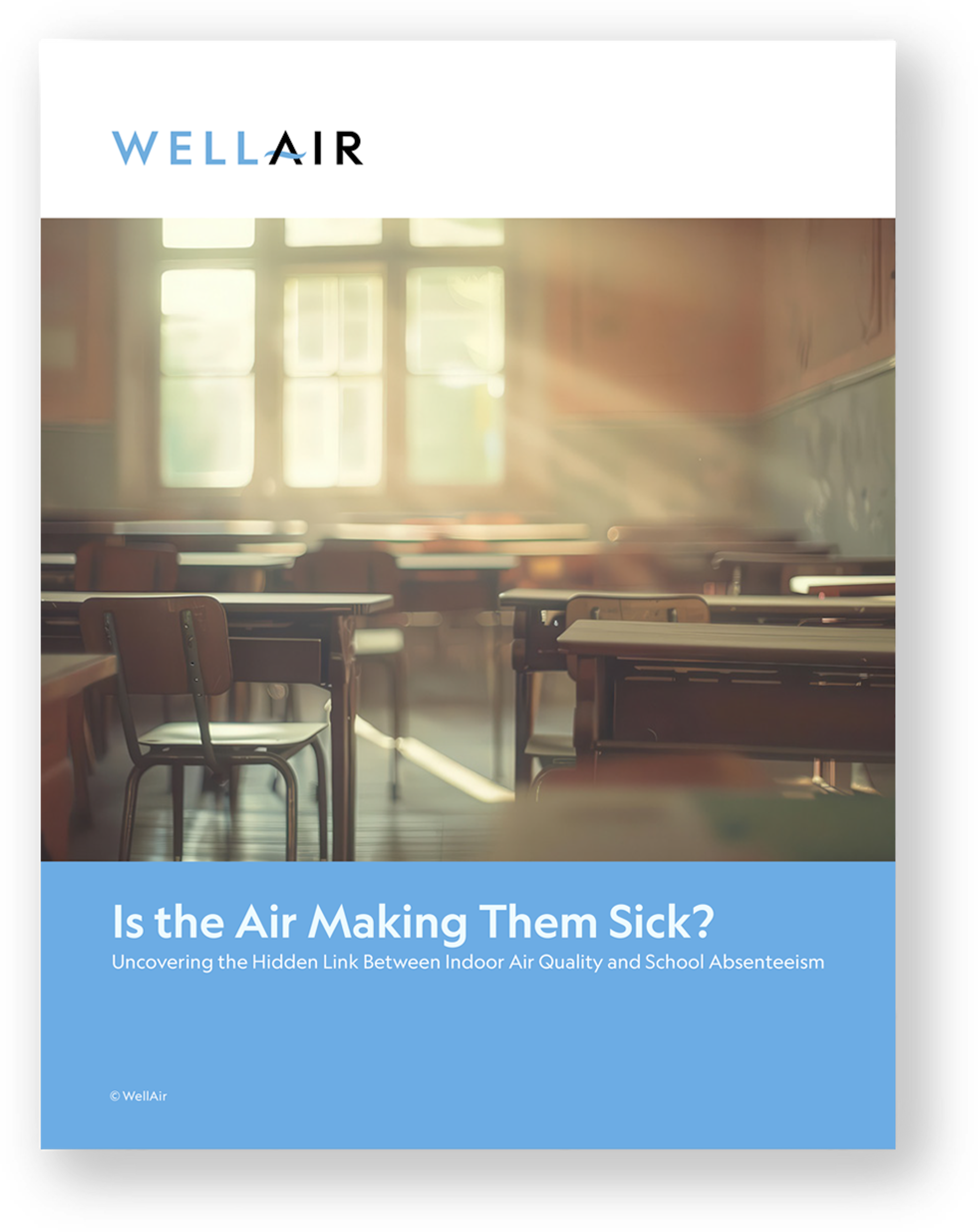
Our white paper, "Is the Air Making Them Sick?", is a must-read for principals, educators, and facilities teams committed to student and staff well-being.

From classrooms to cafeterias, indoor air in schools is often filled with more than just the sound of learning. It can also be filled with pollutants, allergens, and airborne pathogens—contributing to chronic student absences, staff sick days, and disrupted learning.

White paper guide mockup

Why Download This White Paper?

  • 46% of schools affected
  • What's really in your air?
  • The hidden cost of absenteeism
  • Cleaner air, sharper thinking
  • What healthy schools do differently

Improve Indoor Air Quality Across Your Campus

Learn how WellAir helps educational facilities create healthier learning environments through measurable indoor air quality strategies.

WellAir | Schools & Universities | Wellair